We need your permission to load the YouTube video service!
We use a third-party service to embed video content. This service may collect data about your activities. Please read the details and agree to use the service to watch this video
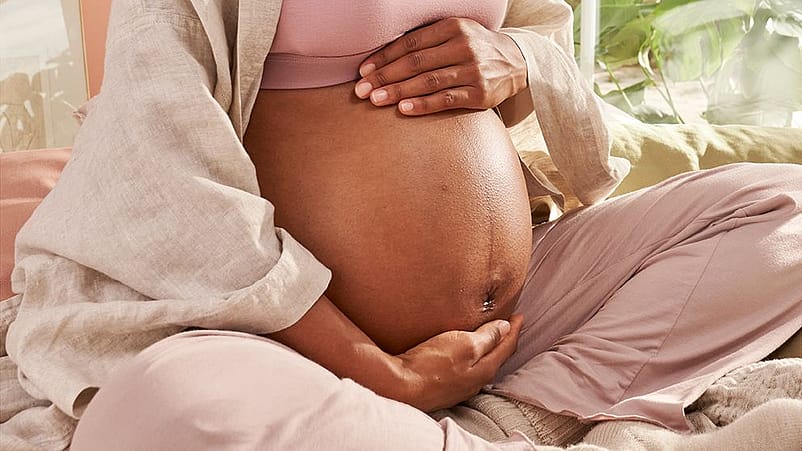
During pregnancy, your body will change. As your baby grows, your belly becomes bigger and rounder, causing the skin to stretch. As your body changes during pregnancy, areas such as the belly, breasts, hips and thighs stretch to accommodate your growing baby. Hormonal changes can also affect the skin, sometimes causing dryness, tightness or itchiness. You are beautiful the way you are, with a new life growing and developing inside you. During this special time, take time out to regularly pamper your body with an extra dose of mindful self-care – your body is doing extraordinary things right now!
Gentle pregnancy massage may help:
Taking a few moments each day to care for your skin can become a grounding ritual during pregnancy.
“You have time to adjust to the changes that are coming. Intentionally take time out and listen to your body and mind.”
The body changes remarkably throughout pregnancy, with each stage bringing new experiences and sensations. In the early weeks, hormonal changes are often the most noticeable, with nausea and fatigue being common companions even before physical changes are visible.
As pregnancy progresses and the uterus grows, many women begin to notice feelings of fullness, digestive discomfort or a pulling sensation through the groin area, often referred to as round ligament pain. Over time, the increasing weight of the baby, uterus, amniotic fluid and placenta can place additional strain on the back, pelvis and legs. Back tension, tired legs and changes in posture are also common as the body adapts to support a growing baby.
At the same time, the skin stretches rapidly as the body changes shape. Hormonal fluctuations can also affect skin elasticity and hydration levels, which is why many women experience feelings of tightness, dryness or the appearance of stretch marks during pregnancy.
Stretch marks are a natural and common part of pregnancy. Genetics, hormones and skin type all influence how skin responds to stretching. Keeping the skin nourished and supple with regular massage and moisturising products may help support skin elasticity, comfort and hydration throughout pregnancy.
Regular massage with nourishing oils or body butter may help support the skin as it stretches throughout pregnancy. Massage encourages mindful touch while helping skincare absorb into the skin.
Using products rich in natural plant oils can help leave skin feeling soft, smooth and nourished. A daily massage ritual may also help improve the appearance of dry or stretched skin over time.
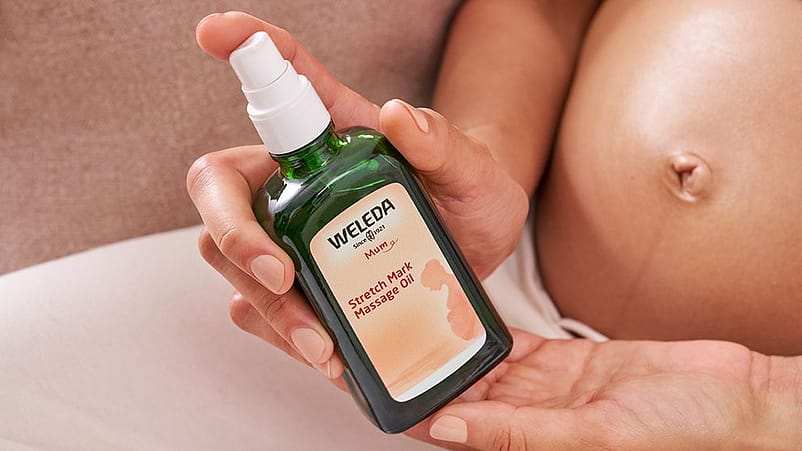
Weleda Stretch Mark Massage Oil combines sweet almond oil, jojoba oil and wheat germ oil with arnica flower extract to nourish the skin and support elasticity during pregnancy.
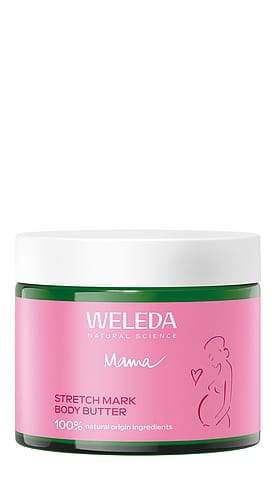
For richer nourishment, Stretch Mark Body Butter melts into the skin to comfort dryness and help keep skin feeling soft and supple.
Pregnancy massage is also a beautiful way to connect with your growing baby. Gentle touch and mindful moments can help you slow down, support your wellbeing, and strengthen the bond between you and your baby before birth.
Many expectant parents find that creating a calming massage ritual in the morning or evening becomes a meaningful part of pregnancy. During these special moments, your baby may respond to the gentle motions or become calm and relaxed — both reactions are completely natural. A loving belly massage can help make your baby’s presence feel even more tangible while encouraging moments of mindfulness, relaxation and connection throughout pregnancy.
Massage can also become a meaningful ritual to share with your partner during pregnancy. Rituals help create a sense of comfort, connection and reassurance, while providing quiet moments to slow down together before your baby arrives.
Taking time to massage the belly, shoulders, lower back or legs can encourage relaxation, physical comfort and closeness throughout pregnancy. Partner massage is a beautiful way to share tenderness and intimacy while helping both parents feel more connected to the pregnancy journey and growing baby.
Many couples find that creating a regular massage ritual after a busy day or on weekends becomes a calming moment of togetherness before becoming a family. Listen to your body and focus on areas that may need extra care and comfort, such as the lower back, shoulders or tired legs.

Recommended Products for Pregnancy Massage
Depending on your preferences, massage oil or body butter are great products for a relaxing massage, appealing to the senses with essential oils. All Weleda oils and lotions are generally suitable for skincare during pregnancy. We particularly recommend our Stretch Mark Massage Oil and Stretch Mark Body Butter, both specially formulated for skincare and massage during pregnancy. It’s best to decide intuitively according to your needs which skincare product appeals to you at the moment. Using a circular motion, massage your abdomen in a clockwise direction. Pregnancy also places strain on your breasts, thighs and buttocks. Gentle care and massage of those areas will help relax muscles and relieve tension.
Support your pregnancy skincare ritual with:
These nourishing products are designed to support skin comfort and care throughout pregnancy, birth, breastfeeding and beyond.
Weleda Stretch Mark Body Butter and Stretch Mark Oil are designed to help prevent stretch marks through regular massage and are also suitable for gentle belly massages.
Pregnancy massage should always feel gentle, calming and comfortable. Taking a few moments each day to massage nourishing oils or body butter into the skin can help support relaxation, comfort stretching skin and encourage connection with your growing baby.
For best results, apply after bathing or showering while skin is still slightly damp.
Belly Massage
Warm a small amount of oil between your hands and gently massage around the belly button in clockwise, circular motions, gradually increasing the size of the circles. Then softly stroke downward toward the thighs. Repeat several times using slow, gentle movements.
Breasts
Using light, nourishing strokes, massage each breast with gentle spiralling motions toward the centre of the chest and nipple area. Avoid massaging the nipples directly.
Hips, Thighs & Bottom
Starting at the knees, use your fingertips to stroke upward toward the hips and upper body. Return toward the knees using the heels of your hands with slightly firmer pressure. Larger circular motions can also help comfort areas where skin may feel tight or stretched.
Lower Back & Legs
Place your hands on either side of the lower back near the sacrum (tailbone). Using the heels of your hands, stroke downward over the buttocks, then gently massage back upward with spread fingertips. Long, gentle strokes over the legs and lower back may help encourage relaxation and comfort tired muscles during pregnancy.
Gentle massage can become part of your self-care ritual throughout pregnancy. Always listen to your body and use gentle pressure that feels comfortable for you.
If you have any concerns about massage during pregnancy, consult your healthcare professional for personalised advice.
From the 36th week of pregnancy, a targeted massage can actively contribute to birth preparation – similar to birth-preparing acupuncture. In addition to birth-preparing acupuncture, massage for birth preparation is also becoming increasingly important. From the 36th week of pregnancy, a special massage while sitting can help to:
The treatment often begins with lymphatic drainage techniques. The associated relaxation promotes body awareness and helps to mentally prepare for birth. If the due date is exceeded, an intensive massage of the sacral region can also be performed – but then specifically and under professional guidance.
During labor or in the breaks between contractions during birth, a massage of the back, legs, or feet can feel good, provide relaxation, and give new strength.
From when can you have a pregnancy massage?
A pregnancy massage is recommended from the 12th week of pregnancy. In the first trimester, most professionals do not offer massages, as the risk of miscarriage is increased during this phase – even if there is no known direct medical contraindication. If in doubt, it is advisable to consult your healthcare professional, gynecologist or midwife beforehand.
Can a massage induce labor?
Yes, certain massage techniques can induce labor – especially intensive massages of the sacral region and foot reflexology massages, where reflex points connected to the uterus are stimulated. For this reason, pregnancy massages should only be performed by trained professionals.
Which massages are prohibited during pregnancy?
Intensive massages of the sacral region and foot reflexology massages should be avoided, as they can trigger premature labor. Massage is also generally not recommended in cases of fever, colds, circulatory problems, high blood pressure, or premature labor.
How often should you have a massage during pregnancy?
There is no general recommendation for a fixed frequency. Many women benefit from a professional massage every two to four weeks. In addition, a daily self-massage with a care oil – especially on the belly, hips, and thighs – is effective and can be easily integrated into everyday life.
Can I give myself a pregnancy massage?
Yes – a gentle self-massage is quite possible and even recommended during pregnancy. Especially suitable are daily massages with a care oil on the belly, hips, breasts, and thighs, as well as a gentle foot massage. However, you should avoid intensive pressure points or the sacral region.
Which oil is suitable for pregnancy massage?
Natural oils with skin-caring, tissue-strengthening ingredients such as vitamin E, rose oil, or almond oil have proven effective. They promote the elasticity of the skin and can help prevent stretch marks. The Weleda Pregnancy Care Oil is specially developed for the needs of the skin during pregnancy and is suitable for both daily self-massage and professional use.
How much does a pregnancy massage cost?
The costs vary depending on the provider, region, and duration of the treatment. A professional pregnancy massage usually costs between $100 and $150 per hour. Midwives, physiotherapists, or specialized massage practices often also offer shorter sessions.
Which areas of the body are off-limits for pregnancy massage?
Two areas are generally off-limits during pregnancy: the sacral region and the foot reflex zones. Both can trigger premature labor if stimulated too intensely. All other areas of the body can be safely treated – with the right technique and positioning.
Special caution applies to:
That’s why many physiotherapists and massage therapists are rightly cautious when treating pregnant women. If you are unsure, always consult your gynecologist or midwife beforehand – they can tell you exactly what is suitable for you and your pregnancy.