
Arnica: The Mountain Flower and Its Natural Heritage
Botanical Profile
What is arnica?
Arnica (Arnica montana) is a perennial flowering plant belonging to the Asteraceae family, which also includes daisies and sunflowers. Recognised by its bright yellow flowers and hardy nature, arnica grows naturally in mountain meadows across central and southern Europe.
Despite its delicate appearance, arnica is remarkably resilient. Its strong stems and hairy leaves help it withstand challenging mountain conditions, including strong winds and changing temperatures. However, the plant is highly sensitive to changes in its surrounding environment, making the preservation of its natural habitat particularly important.
Arnica has been valued in European botanical traditions for centuries and continues to be an important plant in Weleda's understanding of nature.
Where does arnica grow?
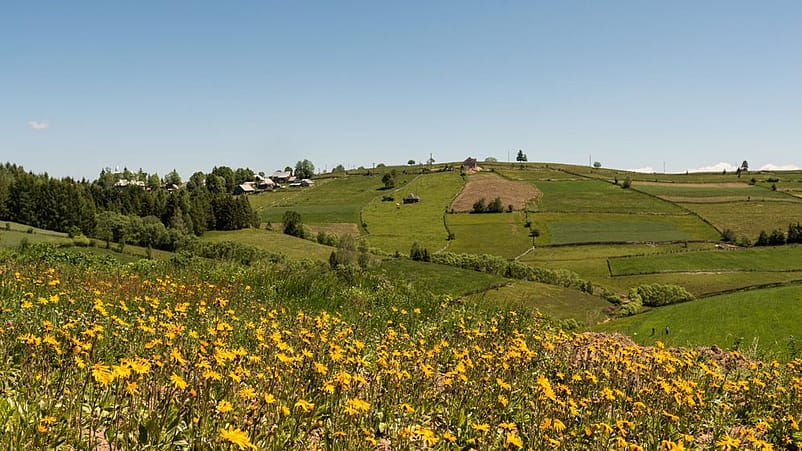
Arnica thrives in open, natural mountain meadows, particularly those with acidic, nutrient-poor and calcium-poor soils. It can be found at elevations reaching approximately 2,800 metres above sea level.
The plant requires specific environmental conditions to flourish. Changes in soil composition, intensive grazing, chemical fertilisers or the spread of trees can affect its growth.
One important region for wild arnica is the Apuseni Mountains in Romania's Carpathian mountain range, where traditional meadow management has helped maintain the conditions this sensitive plant needs.
Arnica flowers: A distinctive botanical appearance
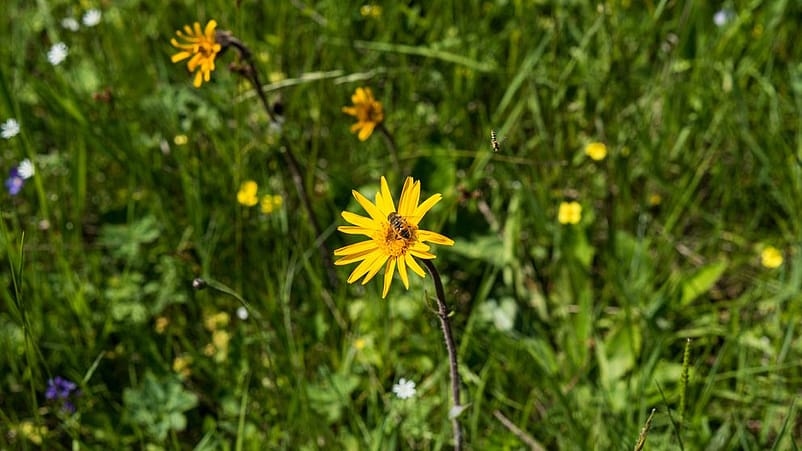
Arnica typically flowers between May and August, producing striking golden-yellow blossoms.
Unlike the evenly arranged petals of many familiar flowers, arnica's petals often appear slightly irregular, giving each flower its own distinctive character.
The plant generally grows between 20 and 60 centimetres tall. Its leaves form a rosette close to the ground, while its upright flowering stems rise above the surrounding meadow vegetation.
Although arnica can withstand exposed mountain conditions, its dependence on relatively undisturbed grasslands makes it particularly vulnerable to changes in land use.
Arnica's history and traditional uses
Arnica has a long history in European botanical traditions. One of its earliest recorded references appears in writings associated with Hildegard of Bingen in the 12th century.
Over subsequent centuries, arnica became widely recognised in traditional European herbal practices, particularly in preparations associated with physical care and wellbeing.
The plant has attracted considerable botanical and scientific interest because of the diverse naturally occurring compounds found in its flowers.
Today, arnica remains an important part of Weleda's botanical heritage.
What makes the arnica plant unique?
Researchers have identified approximately 150 naturally occurring constituents in arnica, including flavonoids, carotenoids, sesquiterpene lactones and essential oils.
These compounds contribute to the plant's distinctive botanical composition and have been the subject of scientific investigation.
Arnica's characteristics reflect the relationship between the plant and its natural environment. Its growth, flowering cycle and composition are influenced by the conditions of the mountain meadows where it thrives.
For Weleda, understanding these botanical characteristics is part of a broader commitment to working with plants and respecting the ecosystems in which they grow.
Why is arnica important for biodiversity?
Arnica is closely connected to the health of traditional European mountain meadows.
These grasslands provide habitats for a diverse range of plant species and depend on careful land management to maintain their natural balance.
Arnica is particularly sensitive to environmental changes. Excessive grazing, chemical fertilisers and the gradual spread of trees can make meadow conditions unsuitable for its growth.
Preserving arnica therefore involves more than protecting a single plant species. It also means supporting the landscapes and traditional agricultural practices that allow these natural meadows to flourish.


Weleda's contribution to sustainable arnica sourcing
In Romania's Apuseni Mountains, wild arnica grows in traditional mountain meadows that have been maintained by local communities for generations.
Weleda's approach to sourcing arnica recognises the relationship between biodiversity, responsible harvesting and the livelihoods of people living in the region.
Wild arnica harvesting provides an additional source of income for local communities, helping create an economic incentive to preserve the meadows rather than convert them to more intensive forms of agriculture.
During the flowering season, local people participate in collecting arnica by hand. This traditional activity connects the value of the plant with the continued care of its natural habitat.
By supporting responsible wild collection, Weleda contributes to an approach that values botanical quality, fair working conditions and the conservation of biodiversity.
Why responsible wild harvesting matters
Although arnica can be cultivated, it is a demanding plant with specific growing requirements.
In the Apuseni Mountains, carefully managed wild harvesting can help support the preservation of existing natural grasslands.
When local communities benefit from maintaining these habitats, there is an additional reason to protect the traditional meadows and their plant diversity.
This relationship between people, plants and landscapes demonstrates how responsible sourcing can contribute to both environmental conservation and local livelihoods.
Arnica and Weleda's connection to nature
Arnica represents an important part of Weleda's botanical heritage.
From its remarkable ability to grow in exposed mountain environments to its long history in European herbal traditions, the plant illustrates the close relationship between nature, people and traditional botanical knowledge.
Through responsible sourcing and support for biodiversity, Weleda seeks to preserve the natural environments in which valuable plants such as arnica thrive.
Understanding the story behind arnica offers a deeper appreciation of the plant itself and the importance of protecting the ecosystems that sustain it.


